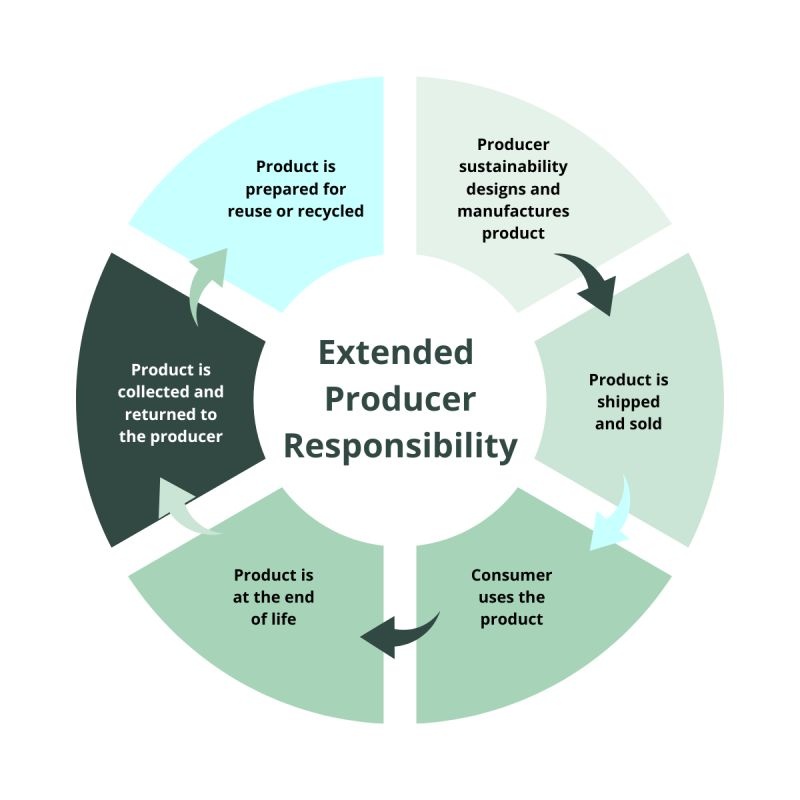
EPR places responsibility on relevant producers, importers and brand owners for the environmentally sound management of products and packaging at the end of their useful life. TANVI Consultancy helps businesses understand the applicable category, organise information and manage the registration and compliance journey.

Extended Producer Responsibility is a policy approach that extends a producer's responsibility into the post-consumer stage of a product's life. Instead of leaving end-of-life management entirely to municipalities or consumers, applicable regulations place defined responsibilities on the businesses introducing products or packaging into the market.
The exact obligation depends on the waste stream and the applicable rules. For example, plastic packaging and electrical/electronic products operate under different regulatory frameworks and portals.

EPR is not a single one-size-fits-all registration. The applicable rules, portal, targets and reporting requirements depend on the product or waste category.
Relevant Producers, Importers and Brand Owners can have EPR obligations for plastic packaging under the Plastic Waste Management framework.
PIBO • PWP • EPR CertificatesProducers of covered electrical and electronic equipment are subject to EPR requirements under the E-Waste Management Rules and CPCB system. E-Waste Management Rules CPCB EPR .
Producer • Recycling • TargetsBattery producers and other regulated stakeholders may have EPR obligations under the Battery Waste Management framework.
Producer • Recycler • EPRTyres, waste oil and other regulated streams have their own EPR mechanisms. Applicability should be assessed for the exact product and business model.
Category-specific compliance
EPR is intended to improve collection, recovery, recycling and environmentally sound end-of-life management. It can also encourage better product and packaging choices by making end-of-life responsibility part of the business equation.
For plastic packaging, CPCB's EPR framework covers Producers, Importers and Brand Owners (PIBOs), along with registered Plastic Waste Processors. The current CPCB system is designed around registration, traceability, certificates and fulfilment of EPR obligations.
Assess packaging categories and the quantities introduced into the market.
Register with the applicable CPCB / SPCB / PCC mechanism as required.
Fulfil obligations through eligible waste-processing channels and certificates.
Maintain transaction evidence and complete applicable reporting requirements.
Understand the product, packaging, business model and relevant EPR category before starting registration.
Organise business, product, quantity, sales, waste and other information required for the applicable application.
Assist with the applicable online registration workflow, application preparation and document coordination.
Help structure the information and supporting records needed to demonstrate fulfilment of applicable obligations.
Support preparation of applicable annual returns, transaction records and compliance documentation.
Coordinate responses, track application status and help communicate the next action required.
The final checklist depends on the category and applicant. Common information may include:
Identify what you manufacture, import, sell or introduce into the market and which EPR framework may apply.
Review the applicable category, registration authority / portal, quantities, targets and reporting requirements.
Organise company, product, packaging, sales, waste and other required information.
Submit the applicable application and coordinate responses to queries or additional information requests.
Keep records, certificates, transaction evidence and returns aligned with the applicable framework.
We focus on understanding the actual requirement first, then helping you organise the information, registration documents and follow-up needed for the applicable EPR framework.
EPR is category-specific. Plastic packaging, e-waste, battery waste, tyres and other streams can have different rules, portals, targets and documentation. A proper applicability check should come before registration.
Tell us what you manufacture, import or sell and we'll discuss the applicable category and next steps.
EPR requirements can change with amendments, category-specific rules and portal updates. The applicable framework should be confirmed for the product and business model before filing.